

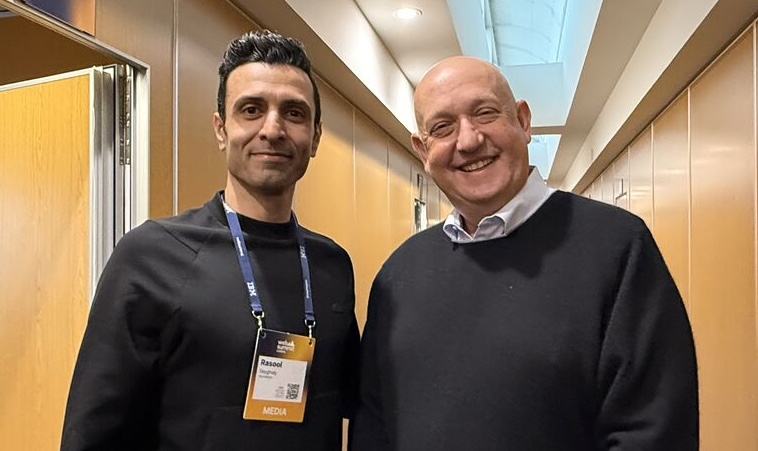
Interviewed by: Rasool Seyghaly, Founder & CEO at Techwich
Guest: Tye Brady, Chief Technologist, Amazon Robotics
Why this matters
We sat down with Tye Brady to understand how Amazon blends robotics, AI and large-scale operations. The core message was clear: at Amazon, robots are built to extend human capability, not replace it. That philosophy shows up in productivity, safety, and how roles are evolving across next-gen fulfillment centers.
The big themes
- Human + machine, by design. Robots and AI assist operators with recommendations while people make final decisions.
- Operations AI, end to end. From site-level decision support to real-time multi-robot path planning and grasping, AI now touches every layer of the stack.
- Measurable outcomes. In Amazon’s latest generation facilities, overall order processing speed has improved by ~25% thanks to system-level optimization, not faster human pacing.
- Safer floors. Recordable injury rates have dropped by 30%+ over five years where advanced robotics is deployed.
- New roles, new skills. Demand for technical roles—robot maintenance, deployment, optimization—has risen by ~30% in those sites.
- Platform for others. The same AI/ML infrastructure that powers Amazon’s operations is available to businesses through AWS, with the security and scale you’d expect.
- Humanoids, carefully. Bipedal systems are in R&D and pilots; Amazon starts from the problem and required functions, not the robot’s form.
What we asked — and what we heard
Are robots replacing people?
No. Brady framed robotics as amplification: give operators better tools and let them decide. That’s why Amazon continues to hire at scale, including seasonal peaks.
How do you measure AI’s impact on the supply chain?
With hard numbers. Amazon tracks building-level throughput, promise accuracy, delivery times, and safety metrics. The newest facilities show ~25% faster order processing at the system level.
What does “AI in operations” look like in practice?
Two layers:
- Facility decision support (a digital assistant pilot): fuses live and historical data to surface bottlenecks early and recommend actions like re-routing flows.
- Low-level autonomy: multi-robot trajectory planning for thousands of units, plus vision models that identify items and compute grasp points almost instantly.
Will Amazon sell robots as a product line?
Amazon’s AI backbone already reaches others via AWS. For hardware, Amazon builds most systems in-house end-to-end for reliability and tight integration, while also investing through the Amazon Industrial Innovation Fund and partnering where it makes sense.
What about safety and job quality?
New systems roll out to a small area first, with structured feedback from frontline associates. Safety is a first-class outcome; reported injury rates have fallen significantly where modern robotics is deployed.
Are humanoid robots part of the plan?
They’re being tested. The approach is “functions before form”: define the job to be done (manipulation, mobility, picking) and choose the form that best delivers it—wheeled, legged, or otherwise.
How are roles changing on the floor?
More technical depth is needed: diagnostics, maintenance, deployment, and tuning. Upskilling is a priority as sites adopt advanced systems.
What operators and founders can take away
- Treat AI as a decision partner: keep humans in the loop for judgment and exception handling.
- Chase data movement, not just FLOPs: performance gains come from system-level orchestration, not pushing people harder.
- Make safety a product metric: pilot small, capture frontline feedback, expand by evidence.
- Build a talent pipeline for mechatronics, robotics ops, and MLOps; your constraints will shift from hardware to skills.
- Think platform: where possible, externalize wins through cloud services or partnerships; not every component needs to be built from scratch.
About the guest
Tye Brady leads technology strategy at Amazon Robotics, guiding the architecture that powers one of the world’s largest fleets of autonomous systems across hundreds of facilities.


Leave a Reply